The MTD Command Centre
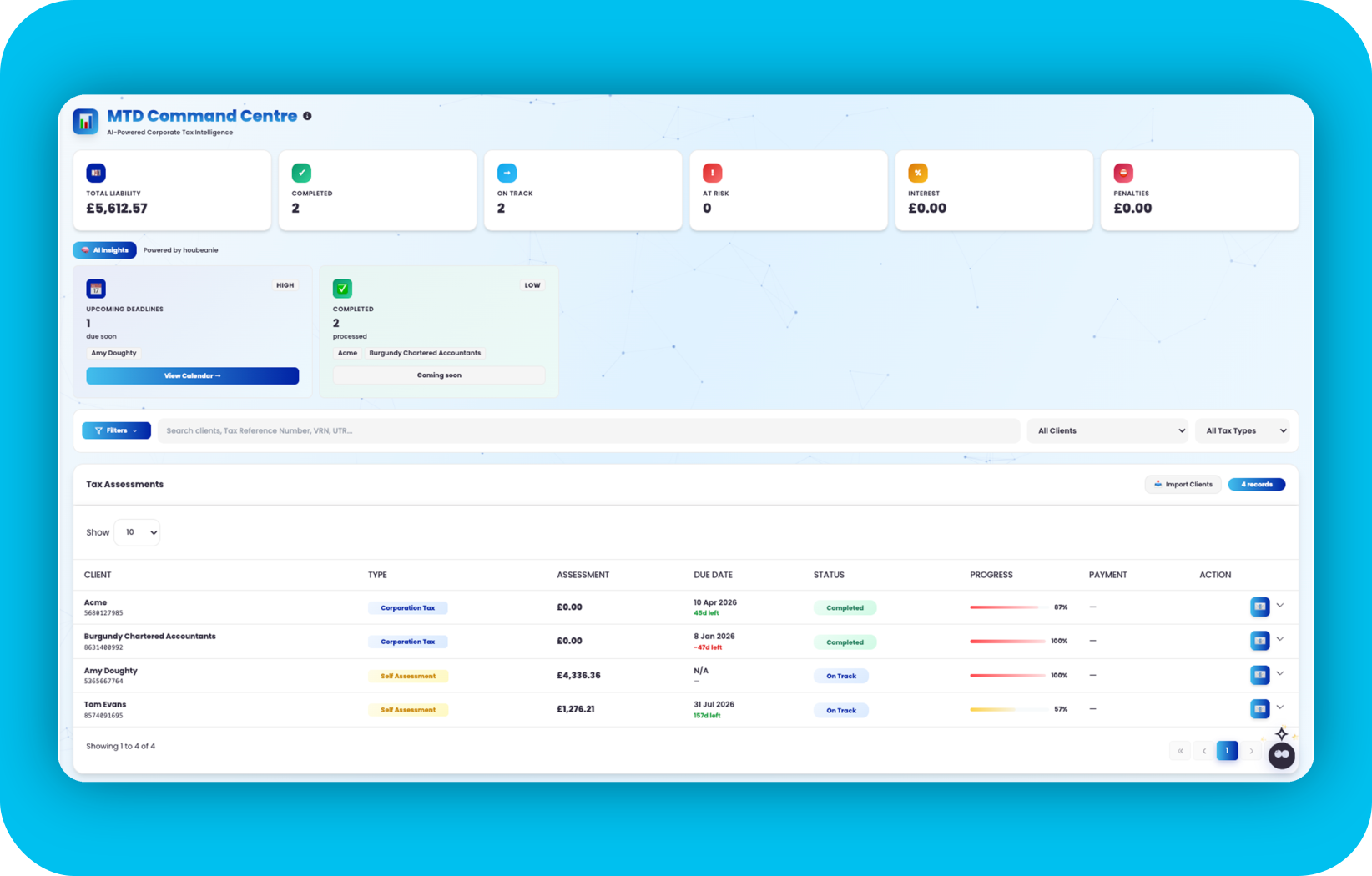
A Deeper Dive in The MTD Command Centre
Making Tax Digital is often described as a compliance initiative. In reality, it is a structural transformation in how tax data is created, stored, connected, and submitted to HM Revenue & Customs.
For many firms, the transition to MTD has not simplified operations. Instead, it has introduced additional systems, parallel processes, bridging software, and fragmented workflows. The core issue is not the act of submission itself. Submitting through an API is straightforward. The complexity lies in everything that must happen before that moment.
The MTD Command Centre was built to address that complexity.
It is not a filing tool, and it is not another standalone MTD solution. It is a control and orchestration layer designed to sit above bookkeeping platforms and tax software, providing visibility, structure, and intelligence across the entire MTD lifecycle.
The Operational Reality of MTD
MTD introduces strict requirements around digital record keeping and digital links. Data must be maintained in compliant systems, adjustments must remain traceable, and submissions must flow through recognised API connections. On paper, this creates a more modern framework.
In practice, firms operate across multiple accounting systems, spreadsheets, internal workarounds, and manual review processes. VAT, Income Tax Self Assessment, and future Corporation Tax obligations often sit in separate operational silos. As submission frequency increases, particularly under MTD for Income Tax, the pressure compounds.
The result is not usually technical failure. It is operational strain.
Partners lack portfolio-level visibility. Managers rely on manual tracking. Teams scramble close to deadlines because readiness is unclear until late in the process. Digital link risks are often invisible until exposed by review. Compliance becomes deadline-driven rather than system-controlled.
The MTD Command Centre addresses this by centralising oversight and creating a structured compliance environment.
Architectural Positioning
The MTD Command Centre does not replace bookkeeping software or practice management systems. Instead, it integrates with them through API connectivity and acts as a supervisory layer across all connected data sources.
Its architecture is designed around three principles: preservation of digital integrity, continuous visibility, and controlled workflow progression.
Data remains within compliant digital systems. There is no rekeying, no broken audit trails, and no dependency on manual copy-and-paste processes that could compromise digital link requirements. Instead, the Command Centre monitors data flow, validates readiness, and ensures that submission outputs remain traceable to their source.
This approach transforms MTD from a set of individual filing events into a managed operational pipeline.
Submission Readiness as a Managed State
One of the most significant risks under MTD is late-stage discovery. Firms often only realise that data is incomplete, reconciliations are outstanding, or anomalies exist when they begin preparing a submission.
The MTD Command Centre introduces structured readiness assessment. It continuously evaluates whether required records are present, whether reconciliations are complete, and whether outstanding queries or inconsistencies could block filing. Rather than relying on manual checks or last-minute reviews, firms gain a live understanding of submission status across their entire portfolio.
This shifts the compliance process from reactive to proactive. Deadlines become controlled checkpoints rather than pressure points.
Portfolio-Level Visibility
Under traditional processes, compliance oversight is fragmented. Teams log into individual client systems to determine status. Managers depend on spreadsheets or internal trackers to estimate workload. Risk visibility is limited.
The MTD Command Centre aggregates compliance status across all connected entities. Upcoming obligations, submission states, and flagged risks are visible in one controlled environment. This allows firms to allocate resources more effectively, balance workload across teams, and identify bottlenecks before they escalate.
As submission frequency increases under MTD, this portfolio-level visibility becomes essential rather than optional.
Digital Link Protection and Audit Integrity
A fundamental requirement of MTD is the maintenance of digital links between systems. Manual transfers of data can break compliance and introduce regulatory exposure.
The MTD Command Centre enforces system-to-system connectivity and preserves audit trails throughout the submission lifecycle. Adjustments remain traceable, and data lineage can be demonstrated with confidence. This reduces the risk associated with fragmented workflows and provides firms with defensible compliance infrastructure.
In a regulatory environment that continues to evolve, this protection becomes strategically important.
Intelligent Oversight, Not Replacement Judgement
Automation within the MTD Command Centre handles repeatable processes and workflow progression. Where appropriate, intelligent analysis is applied to surface anomalies, highlight unusual variances between periods, and draw attention to patterns that warrant professional review.
The objective is not to replace professional judgement. It is to direct attention where it has the highest value. Compliance becomes structured and controlled, freeing experienced staff to focus on advisory work rather than administrative verification.
From Filing Tool to Operational Infrastructure
Many MTD solutions focus narrowly on enabling submission. The MTD Command Centre focuses on managing the environment in which submission occurs.
As HMRC continues its long-term digital transformation programme, submission frequency will increase and digital compliance standards will tighten. Firms can continue layering tools in response, or they can implement infrastructure that orchestrates the entire process.
The MTD Command Centre represents that infrastructure.
It reframes MTD from a regulatory burden into a managed system of control. Instead of asking whether a return has been filed, firms gain clarity over whether their entire tax portfolio is stable, visible, and compliant.
That distinction defines the difference between surviving MTD and operating confidently within it.